

smccallum

Image
Sarah McCallum S25 Cropped B
smccallum@arizona.edu
Office
Learning Services Building 214
Office Hours
Spring 2026: On Sabbatical
McCallum, Sarah
Associate Professor

Research Interests

Latin language and literature, especially Republican and Augustan poetry

  • Roman elegy and epic
  • Catullus, Lucretius, Vergil, Propertius, Tibullus, and Ovid

Greek language and literature, especially Archaic and Hellenistic poetry

  • Epic, lyric, and epigram
  • Homer, Hesiod, Callimachus, and Theocritus

The ancient literary tradition

  • Genre, aesthetics, and intertextuality

The concept of love in Roman poetry

  • Tracing the development of a cultural concept


Publications

Monograph

  • McCallum, Sarah L. Elegiac Love and Death in Vergil's Aeneid. Oxford University Press, 2023.
Image
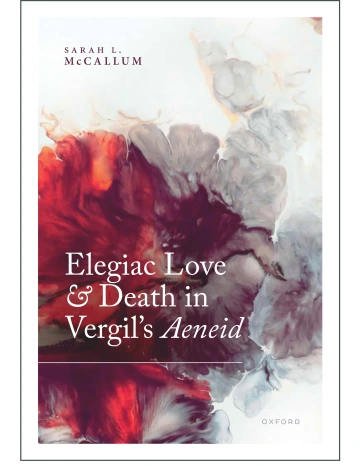
Elegiac Love and Death - Cover Image


Co-edited volume

  • Gwynaeth McIntyre and Sarah McCallum, eds. Uncovering Anna Perenna: A Focused Study of Myth and Culture. London; New York: Bloomsbury Academic, 2019.
Image
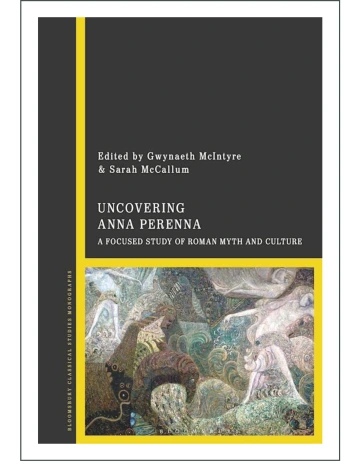
Uncovering Anna Perenna - Cover


Articles and book chapters                                                        

  • “From Caieta to Erato: Vergil’s Elegiac Program in Aeneid 7.1–45.”  In Vergil and Elegy, edited by Alison Keith and Micah Myers, 125–38. University of Toronto Press, 2023.
  • Nulla fabula tegenda: Ovid’s Elegiac Revision of Vergilian Allusion.” In Uncovering Anna Perenna: A Focused Study of Myth and Culture, edited by Gwynaeth McIntyre and Sarah McCallum, 19–36. Bloomsbury Academic, 2019.
  • Ego sum pastor: Pastoral Transformations in the Tale of Mercury and Battus (Ov. Met. 2.676–707).” Classical Outlook 92.2 (2017): 29–34.
  • Primus Pastor: The Origins of Pastoral Programme in Ovid’s Metamorphoses.” In Roman Literary Cultures: Domestic Politics, Revolutionary Poetics, Civic Spectacle, edited by Alison Keith and Jonathan Edmondson, 124–39. University of Toronto Press, 2016.
  • Heu Ligurine: Echoes of Vergil in Horace Odes 4.1.” Vergilius 61 (2015): 29–42.
  • “Elegiac Amor and Mors in Vergil’s ‘Italian Iliad’: A Case Study (Verg. Aen. 10.185–193).” Classical Quarterly 65.2 (2015): 693–703.

Public Scholarship                                                        

  • McCallum, Sarah, and Arum Park. “Teaching Love.” Pasts Imperfect (2.10.2022).


Honors and Awards

Society for Classical Studies

  • 2025 Award for Excellence in Teaching at the College Level (Full Story)

University of Arizona

  • 2024 Provost Award for Innovation in Teaching (Full Story)
  • 2024 College of Humanities Distinguished Teaching Award (Full Story
  • 2023–2024 WAC Faculty Fellowship 
  • 2022 Provost Author Support Fund
  • 2021 Five Star Faculty Award Nominee


Spring 2026

On Sabbatical

Currently Teaching

CLAS 224 – Love Through the Ages: Conceptions of Love in Ancient Greece, Rome, and Beyond

In this course, you will use a humanists perspective to critically examine, analyze, discuss, and formulate arguments about ancient Greek and/or Roman conceptions of love and their enduring influence on the artistic, intellectual, and cultural development of subsequent societies.

CLAS 498H – Honors Thesis

An honors thesis is required of all the students graduating with honors. Students ordinarily sign up for this course as a two-semester sequence. The first semester the student performs research under the supervision of a faculty member; the second semester the student writes an honors thesis.

LAT 400 – Prose of the Roman Republic

Extended readings from Sallust, Cicero and Caesar with some grammatical review; development of skills in rapid readings and sight reading.

CLAS 116B – Word Roots: Science and Medical Terminology

This course will focus on the history and structure of words including the use of Greek and Latin roots in the formation of technical terms in medicine and the sciences. Elements of word formation (prefixes, suffixes, and bases) will be intensively studied so that the words can by systematically analyzed and broken down into their component parts. Excellent preparation for standardized tests such as the GMAT, GRE, LSAT, and MCAT.

This course will focus on the history and structure of words including the use of Greek and Latin roots in the formation of technical terms in medicine and the sciences. Elements of word formation (prefixes, suffixes, and bases) will be intensively studied so that the words can by systematically analyzed and broken down into their component parts. Excellent preparation for standardized tests such as the GMAT, GRE, LSAT, and MCAT.

This course will focus on the history and structure of words including the use of Greek and Latin roots in the formation of technical terms in medicine and the sciences. Elements of word formation (prefixes, suffixes, and bases) will be intensively studied so that the words can by systematically analyzed and broken down into their component parts. Excellent preparation for standardized tests such as the GMAT, GRE, LSAT, and MCAT.

This course will focus on the history and structure of words including the use of Greek and Latin roots in the formation of technical terms in medicine and the sciences. Elements of word formation (prefixes, suffixes, and bases) will be intensively studied so that the words can by systematically analyzed and broken down into their component parts. Excellent preparation for standardized tests such as the GMAT, GRE, LSAT, and MCAT.

GRK 112 – Intensive Beginning Classical Greek

Intensive study of basic morphology, grammar, and vocabulary of beginning classical Greek. Greek 112 provides an intensive introduction to Greek and is the equivalent of Greek 101 and 102. There are no prerequisites, though some background in Latin or Romance language may be helpful. As we will cover two semesters of material in fewer than five weeks, the pace is fast and the workload necessarily demanding. Students who successfully complete the course may advance to Greek 212 in Summer term or Greek 201 in the Fall term.